
Visa 482: Should You Lodge Nomination & Visa Together?
At MK Lees Immigration, over 50% of our clients are onshore applicants currently living, studying, and working in Australia. Through our practical experience, we have observed that onshore and offshore clients approach this strategic dilemma from completely different perspectives and concerns: Should we lodge the Visa Application simultaneously along with the Nomination application, or wait for the Nomination to be fully approved before lodging the Visa Application?
While our onshore clients are typically preoccupied with expiring visas, their core questions often sound like: “My visa expires in a few months, so I need to find an approved Standard Business Sponsor (SBS) to lodge my Nomination and Visa Application together” or “My friend did their 482 visa and said their agent lodged both applications simultaneously to save time—does MK Lees offer this approach?”, most offshore clients lean toward caution: “I heard it’s safer to wait until the Nomination is approved before lodging the Visa Application, is that right?”
Through these approaches and inquiries, it is evident that the majority of onshore clients proactively seek to lodge their visa applications simultaneously with the nomination. Conversely, offshore clients largely remain hesitant or unaware of this procedural option due to limited regulatory familiarity, or harbor doubts and reservations about the workflow. Why is there such a distinct difference in mindset and client touchpoints? Today, MK Lees will break down the issue thoroughly, analyzing the official legal framework and weighing the “pros and cons” from both the employee’s and the employer’s perspectives.
Part 1. Official Legal Framework from the Department of Home Affairs (DHA)
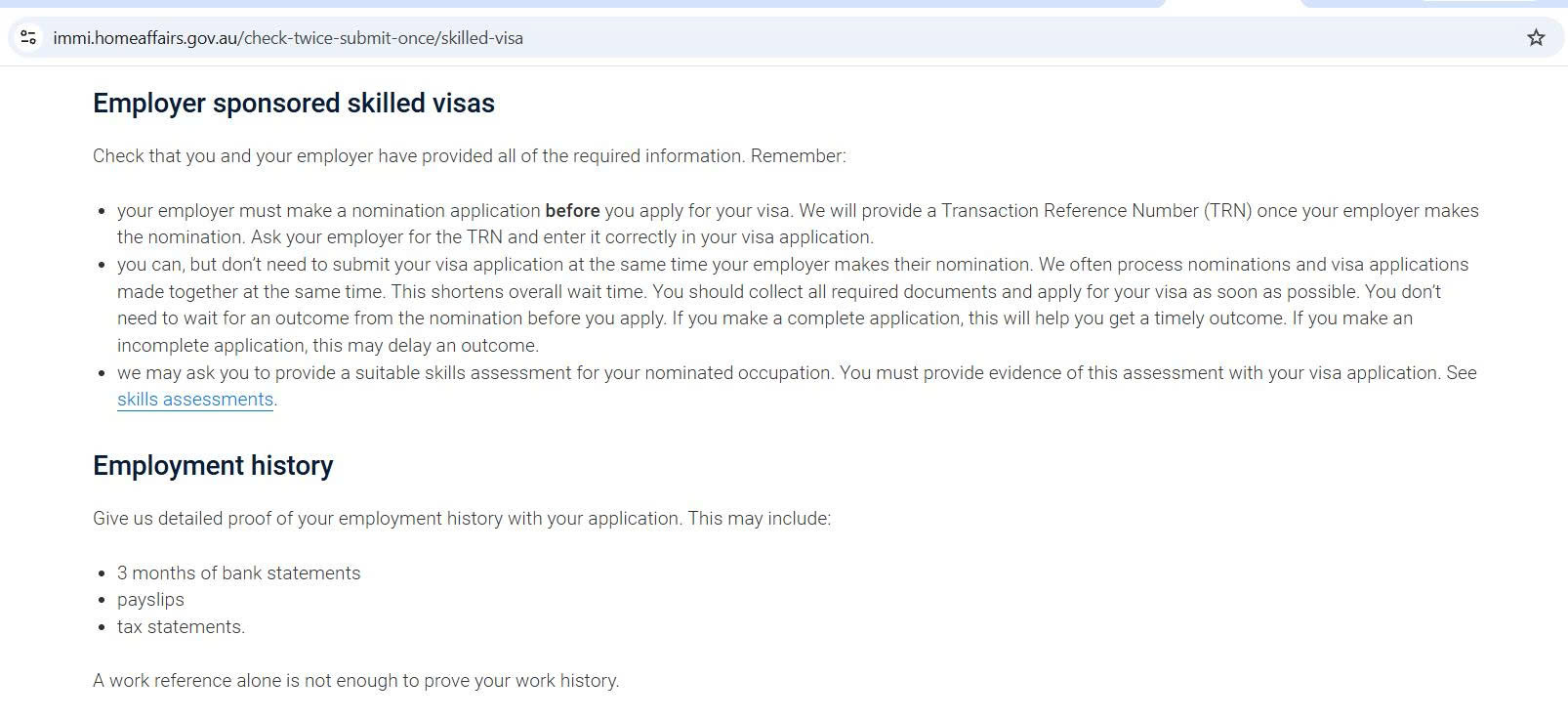
Before weighing your options, it must be emphasized that the Department of Home Affairs fully permits applicants to lodge their visa application as soon as the employer completes the nomination and provides the Transaction Reference Number (TRN), without requiring them to wait for the final nomination approval. You can review and cross-check this official regulation directly on the Department of Home Affairs official guidance page, which notes:
Guidance from the Department of Home Affairs:
“you can, but don’t need to submit your visa application at the same time your employer makes their nomination. We often process nominations and visa applications made together at the same time. This shortens overall wait time. You should collect all required documents and apply for your visa as soon as possible. You don’t need to wait for an outcome from the nomination before you apply.”
Part 2. Multi-Dimensional Analysis: Pros and Cons of Simultaneous vs. Sequential Lodgement
1. Onshore Clients: Pressures of Current Visa Expiry
Practical Context: Holding a visa nearing its expiry date in Australia and highly sensitive to transitional residency timelines.
Simultaneous Lodgement (Preferred Strategy):
- Pros: Instantly triggers a Bridging Visa (typically BVA) upon valid lodgement, helping you maintain lawful residency status while awaiting processing and shortening total waiting times.
- Cons: If the nomination is refused, the attached visa application loses its legal basis. You will lose the visa application fees paid, and simultaneously enter a 35-day countdown window to swiftly secure a new sponsor or alternative solution to maintain lawful residency in Australia.
Sequential Lodgement (Waiting for Nomination Approval before Visa Lodgement): Poses the severe risk of your current visa expiring while anxiously awaiting the outcome, cornering you when you lack a timely visa application to sustain lawful status—leading to the loss of lawful residency in Australia and forcing you to prepare departure plans. However, under MK Lees‘ strategic lens, this approach can become a viable option if you belong to the group not bound by strict visa expiry pressures, provided that: the sponsoring employer is fully flexible with time and ready to wait patiently, or the employer still harbors certain doubts regarding the certainty of the nomination application. In such cases, a sequential approach provides absolute “procedural certainty” before capital is committed to the visa stage.
2. Offshore Clients: Pressures of Waiting Time
Practical Context: Located outside Australia, free from immediate local visa expiration concerns but enduring immense waiting time pressure to officially relocate and work in Australia.
Simultaneous Lodgement (Preferred Strategy):
- Pros: Running both the nomination and visa pipelines in parallel aligns with DHA’s encouraged framework, helping minimize waiting periods.
- Cons: Upfront payment of significant visa application fees to the Government while the nomination lacks official approval.
Sequential Lodgement: Avoids visa application fee risks if the nomination encounters issues, but the heavy trade-off is prolonged cumulative waiting times before setting foot in Australia. More importantly, prolonged delays across disjointed administrative milestones exposes you to the risk of the employer changing their mind and withdrawing sponsorship to pursue a more suitable candidate to resolve their pressing operational needs.
3. Sponsoring Employers: Operational and Workforce Pressures
Practical Context: No enterprise can afford prolonged delays due to operational pressures, workforce shortages, and heavy opportunity costs when critical roles remain vacant.
Simultaneous Lodgement (Preferred Strategy):
- Pros: Demonstrates a strong commitment to partnership, expediting the candidate’s onboarding into official roles upon approval, and retaining talent promptly.
- Cons: Employers must prepare nomination applications with absolute precision and transparency regarding market salary rates (TSMIT/AMSR) and occupational titles to prevent cascading refusal risks.
Sequential Lodgement: Employers must endure tedious waits across fragmented administrative checkpoints. This prolonged downtime causes severe operational bottlenecks, inflates opportunity costs, and directly impairs productivity, business performance, and profit margins when strategic positions remain vacant for too long.
Part 3. Professional Practice of Registered Migration Agents (RMAs)
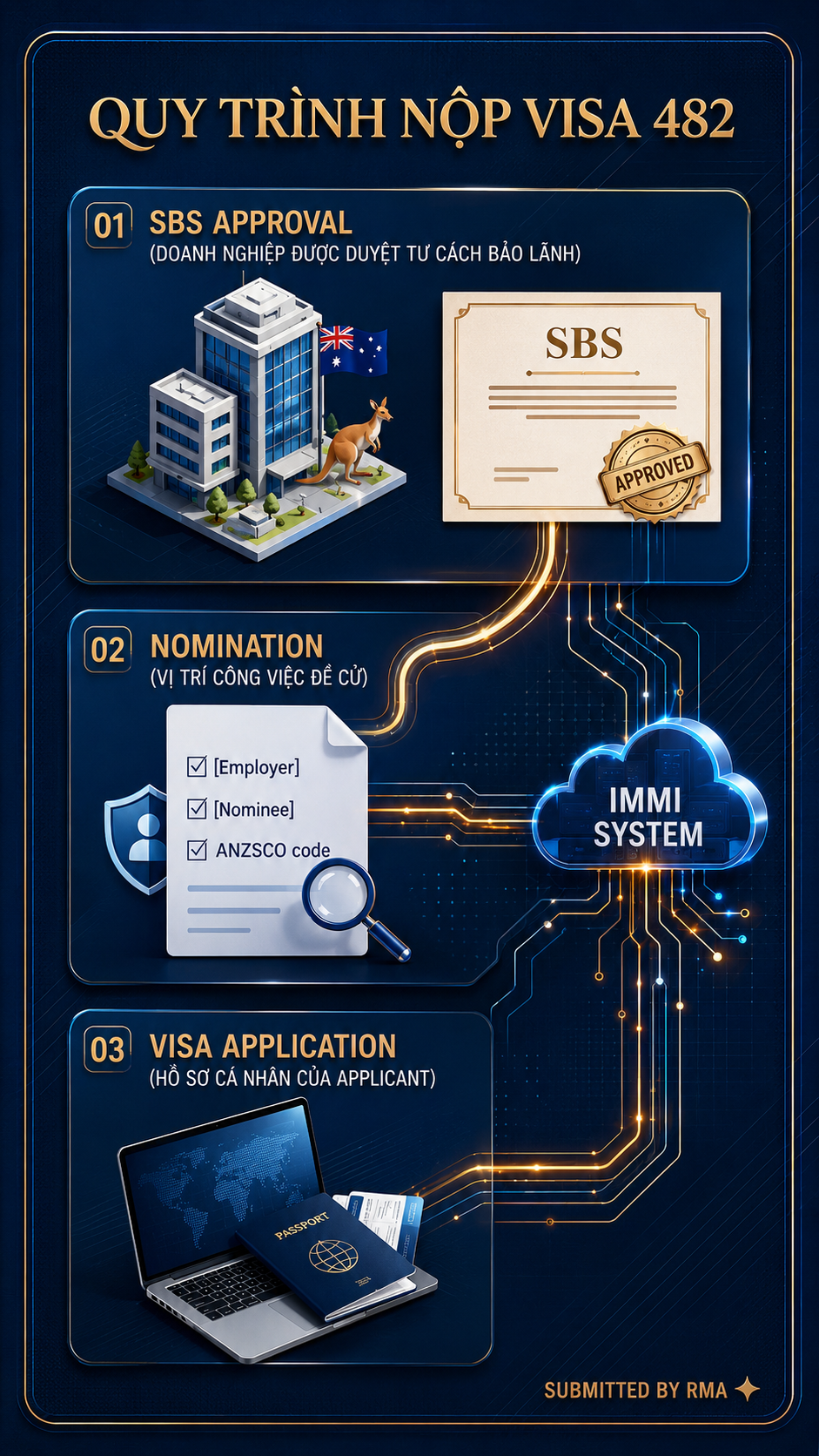
For Registered Migration Agents (RMAs), lodging nomination and visa applications concurrently is a standard practice designed to optimize overall timelines for clients.
From the Department of Home Affairs (DHA) system administration perspective, this mechanism operates through specific linkages:
1. Integration via Transaction Reference Number (TRN)
- Nomination Creation First: When an agent lodges a nomination application, the system generates a unique transaction code known as the Nomination TRN.
- Attaching the Visa to the Nomination: Immediately after, when lodging the Subclass 482 Visa Application, the immigration portal mandates entering this Nomination TRN to structurally “anchor” the applicant’s visa file to the correct corporate nomination.
- Thanks to this TRN linkage, even while the nomination is pending, the system accepts the visa application as a valid lodgement.
2. Status of the Visa Application While Nomination is Pending
When lodging simultaneously while the nomination remains pending, your visa file enters a “Received” or “In Progress” status in the system but remains temporarily put on hold for substantive assessment.
The Department of Home Affairs enforces a strict legal principle: A visa cannot be granted without an approved nomination.
Consequently, the Department Case Officer prioritizes processing the nomination. Document requests (if any), skills assessments, salary benchmarks, and business scale verifications are fully resolved at the nomination stage.
3. What Happens Next?
- Upon Nomination Approval: As soon as the nomination status switches to Approved, the system updates the linkage automatically. At this point, your Visa Application file is formally unlocked for the Case Officer to assess remaining personal criteria (such as character, health, and English language proficiency).
- Visa Grant: Once all personal requirements are satisfied, the official Visa Grant Letter is issued.
Part 4. Expert Advice from MK Lees Immigration
Simultaneous lodgement is not merely a routine agency procedure, but a high-value strategy that helps significantly reduce overall processing times in alignment with Australian Government guidelines. However, this approach only becomes a “powerful tool” when your nomination file undergoes rigorous vetting, absolute transparency, and meticulous preparation handled by experienced Registered Migration Agents (RMAs).
If you are facing a critical crossroads with your visa pathway—whether you are an onshore applicant needing urgent visa solutions or an offshore applicant seeking to streamline waiting times—do not hesitate to connect with the team at MK Lees Immigration for comprehensive, end-to-end strategic advice from our RMA experts.